
Understanding the Symptoms and Causes of PCOS and How You Can Use Food to Feel Your Best
Navigating health topics can sometimes feel overwhelming, especially when you come across something like Polycystic Ovary Syndrome (PCOS). It sounds complicated, but it's a very common health condition that affects many girls and women. The good news is, with the right information and a few lifestyle changes, it can be managed effectively.
A few years ago, I noticed my periods were irregular, and I had sudden acne that didn’t seem to go away. It was confusing and overwhelming, especially as the symptoms started affecting my confidence and mood. After some doctor visits, I was diagnosed with PCOS. Learning about it was a turning point. I realised that while PCOS is challenging, it's manageable with the right mindset and lifestyle. I started focusing on nourishing my body with balanced nutrition and gentle exercise, and gradually, I felt more in control and hopeful. Sharing this story with you is part of my mission to remind you that you’re not alone and there is a path forward.
What Exactly is PCOS?
Think of your body as a team where hormones are the messengers, telling different parts what to do. In PCOS, some of these hormonal messages get a little mixed up. Specifically, the body might make slightly more androgens (often called "male hormones", though everyone has them) than it needs. This imbalance can affect your period, skin, hair, and overall well-being.
Common Signs and Symptoms
PCOS shows up differently for everyone, but here are some of the most common signs:
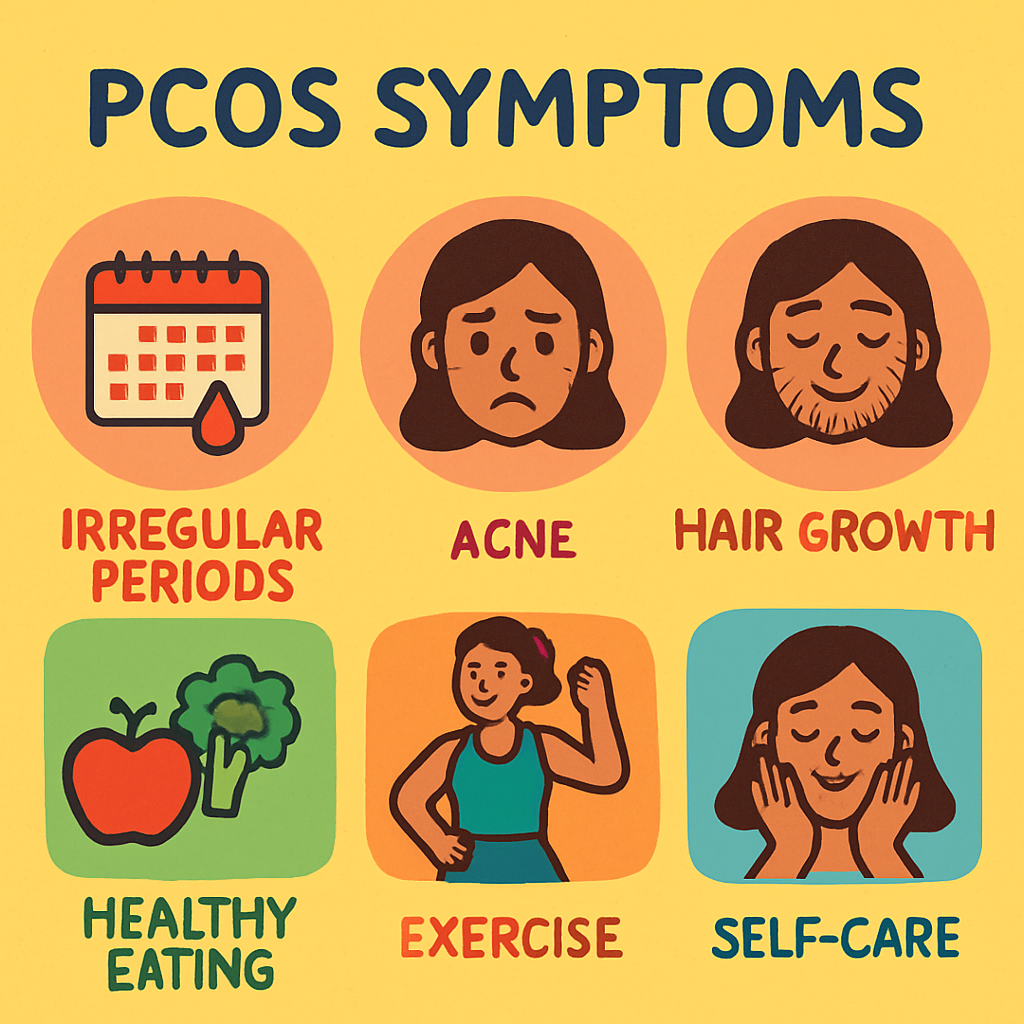
- Irregular Periods: Your period might not come every month, or the timing could be very unpredictable.
- Acne: You might notice more breakouts than usual, especially on your chin, jawline, and back.
- Unwanted Hair Growth: Some girls notice extra hair growing on their face, chest, or other parts of the body.
- Thinning Hair: The hair on your head might start to thin out.
- Weight Changes: It can sometimes be harder to manage your weight.
If any of these sound familiar, it’s a good idea to chat with a doctor. They can help you understand what's going on and confirm if it's PCOS.
What Causes It?
Doctors are still figuring out the exact cause of PCOS, but it's believed to be a mix of genetics and lifestyle factors. If someone in your family has it, you might be more likely to have it too. Another key factor is insulin resistance, which means your body doesn't use the hormone insulin as effectively as it should. This can contribute to the hormonal imbalance seen in PCOS.
Nutritional Strategies to Feel Your Best
One of the most powerful tools for managing PCOS is nutrition. What you eat can make a huge difference in how you feel. Here are some simple, effective strategies:
- Balance Your Plate: Aim to include a source of protein (like chicken, fish, beans, or tofu), healthy carbs (like whole-wheat bread, brown rice, or quinoa), and healthy fats (like avocado, nuts, and seeds) in every meal. This combination helps keep your blood sugar stable, which is super important for managing PCOS symptoms.
- Choose High-Fiber Foods: Foods rich in fiber, such as fruits, vegetables, and whole grains, help slow down digestion and prevent sharp spikes in blood sugar. Think of adding an apple to your lunch or having a side of steamed broccoli with dinner.
- Limit Sugary Drinks and Snacks: Sodas, sugary juices, and candy can cause your blood sugar to spike and then crash, which can make PCOS symptoms worse. Opt for water, herbal tea, or whole fruits instead.
- Don't Skip Meals: Eating regular meals throughout the day helps keep your energy levels and hormones more stable.
It's Not Just About Food
Besides nutrition, a couple of other things can help:
- Gentle Movement: Regular physical activity, like walking, dancing, or yoga, can improve your body's use of insulin and help balance hormones.
- Manage Stress: Stress can mess with your hormones. Finding activities that help you relax, like listening to music, drawing, or spending time with friends, is great for your overall health.
You've Got This!
Living with PCOS is a journey, and it's all about finding what works for you. By making small, thoughtful changes to your diet and lifestyle, you can manage your symptoms and feel empowered. Remember, you're not alone in this, and it’s always okay to ask for help from a trusted adult or a healthcare professional.
Your journey is unique, and we're here to support you. If this guide was helpful, please share it with a friend who might benefit. We’d also love to hear from you—leave a comment below with your thoughts or questions!