
The Lifebringer of Bloomhaven
A fantasy tale that reveals how Folate (Vitamin B9) powers growth, energy and new life in your body.
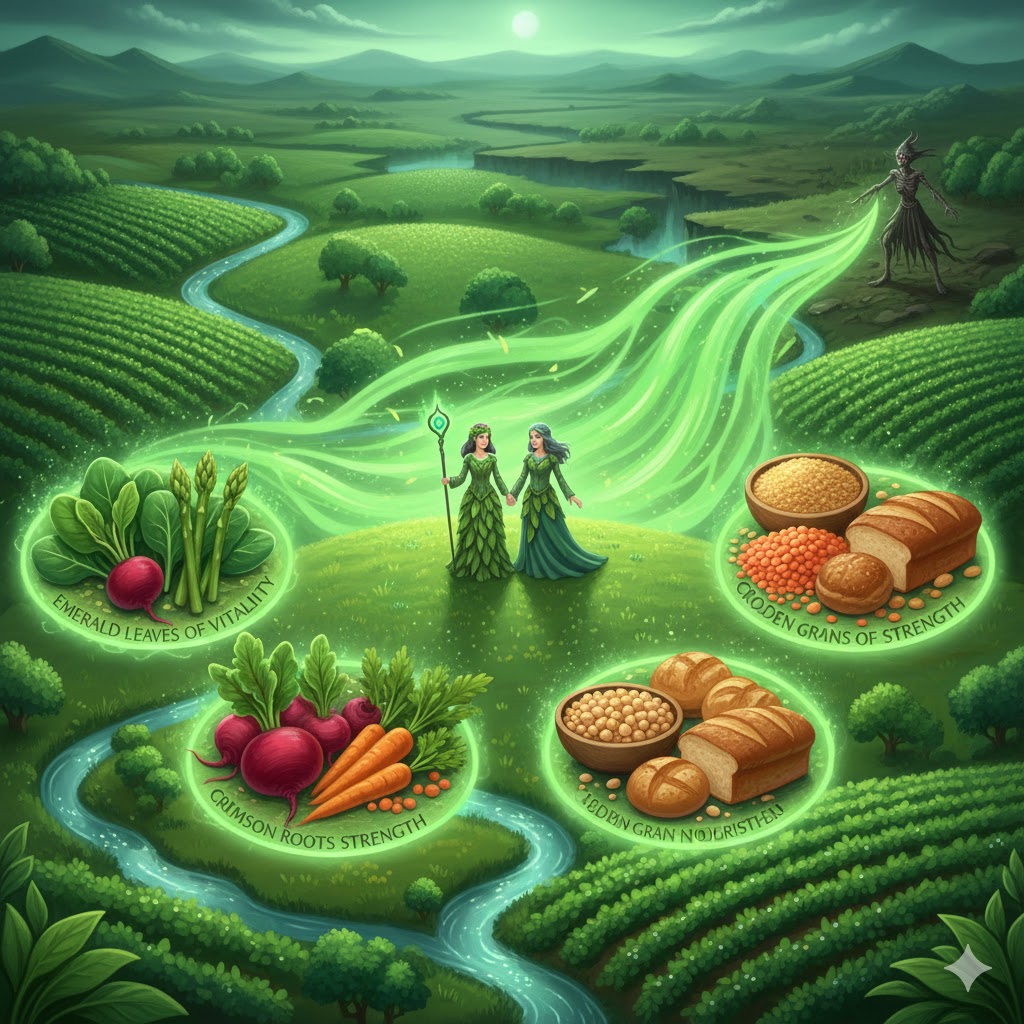
The Kingdom of Bloomhaven
In the flourishing kingdom of Bloomhaven, a magical force known as Vitamin B9, or Folate, nurtured life itself. This sacred energy helped new life grow, kept minds sharp, and ensured every citizen stayed strong.
But hidden in the shadows lurked a terrible foe—Withera the Waster, who sought to drain the land of its vitality. One day, Withera unleashed her wicked spell, weakening the kingdom’s strength. The crops withered, the people grew tired, and new life struggled to emerge. Even the mighty healers of Bloomhaven felt powerless.
Sage Flora, the guardian of growth, rushed to Queen Verdana: “The lifeblood of our land is fading! We must gather the Emerald Leaves of Vitality, the Crimson Roots of Strength, and the Golden Grains of Nourishment. Only then can we restore Bloomhaven’s strength!”
The people set out on a grand quest, gathering these sacred foods. As they ate, Folate’s Power surged through the land, reviving crops, restoring strength, and ensuring new life could flourish. With a final surge of energy, Withera the Waster was banished, never to return.
From that day on, the people of Bloomhaven swore to honor Vitamin B9 – the Lifebringer, keeping their kingdom full of growth and vitality forever.
What Is Vitamin B9 (Folate) in Real Life?
Outside the world of Bloomhaven, Folate (or Vitamin B9) is a water‑soluble B‑vitamin that helps your body make and repair DNA and supports rapid cell division. It is essential for forming healthy red blood cells and for tissues that grow or heal quickly.
Because of this, folate is especially important during times of fast growth, such as pregnancy, infancy and adolescence. It keeps the Lifebringer’s magic flowing in every new cell your body creates.
Withera’s Curse: When Folate Runs Low
In Bloomhaven, Withera’s spell makes crops fail and people weak. In real life, folate deficiency can lead to a type of anaemia called megaloblastic anaemia, where red blood cells are large, fragile and not fully mature.
Symptoms can include tiredness, weakness, pale skin, shortness of breath, poor concentration and headaches. Over time, low folate may also affect mood and appetite, echoing the fading energy of Bloomhaven under Withera’s curse.
Folate and New Life: Protecting the “Sprouts” of Bloomhaven
In your story, new life in Bloomhaven struggles when folate’s power fades. This is very close to reality. Adequate folate before and during early pregnancy helps lower the risk of serious birth defects of the baby’s brain and spine, known as neural tube defects.
That is why many guidelines recommend that people who could become pregnant take a folic acid supplement in addition to eating folate‑rich foods. It is like making sure the Lifebringer’s magic is strong before a new forest of life begins to grow.
Emerald Leaves, Crimson Roots & Golden Grains
Sage Flora’s sacred foods are real‑world folate heroes. Here is how to bring the Emerald Leaves of Vitality, Crimson Roots of Strength and Golden Grains of Nourishment onto your everyday plate.
🌿 Emerald Leaves of Vitality
Spinach • Kale • Asparagus
Dark leafy greens are among the richest natural sources of folate. Just a serving of cooked spinach, kale or asparagus can cover a meaningful part of your daily Lifebringer needs.
🥕 Crimson Roots of Strength
Beets • Carrots
Beets provide folate along with natural nitrates that support blood flow, while carrots bring beta‑carotene for vision and immunity. Together they colour your plate and feed your blood.
🌾 Golden Grains of Nourishment
Lentils • Chickpeas • Whole wheat
Lentils and chickpeas are folate powerhouses, while whole‑wheat breads and pastas often contain added folic acid. They supply slow‑release energy, fibre and plenty of B‑vitamins.
How Much Folate Does a Bloomhaven Citizen Need?
For most healthy adults, nutrition guidelines suggest aiming for around 400 micrograms (mcg) of folate per day from food and fortified sources. This keeps red blood cells forming properly and supports everyday repair and renewal.
During pregnancy, needs climb to about 600 mcg per day, because both the parent and developing baby are building new cells at a rapid pace. People who could become pregnant are commonly advised to take an additional 400 mcg of folic acid from a supplement or fortified foods, alongside a folate‑rich diet.
• Adults: ~400 mcg folate per day.
• Planning pregnancy: folate‑rich meals + 400 mcg folic acid supplement (as advised).
• Pregnant: about 600 mcg folate total from food and prenatal vitamins.
Can You Have Too Much Folic Magic?
Folate from natural foods is considered very safe. The main concern with “too much” usually comes from high‑dose folic acid supplements, not salads or lentil soups.
Long‑term intakes above about 1,000 mcg per day of folic acid can sometimes hide the signs of a vitamin B12 deficiency, delaying diagnosis. That is why supplement doses—especially in pregnancy—should follow personalised advice from a healthcare professional.
Bring Bloomhaven’s Lifebringer to Your Plate
When you build a salad with spinach and kale, roast beets and carrots, or enjoy a warm bowl of lentil and chickpea curry with whole‑wheat bread, you are recreating the feast that saved Bloomhaven.
Make these Emerald Leaves, Crimson Roots and Golden Grains regular guests in your meals, and Vitamin B9’s quiet Lifebringer magic will help your blood, your energy and every growing cell stay as strong as Queen Verdana’s flourishing kingdom.