
Power of O: Orange, Okra, Onion & Olives
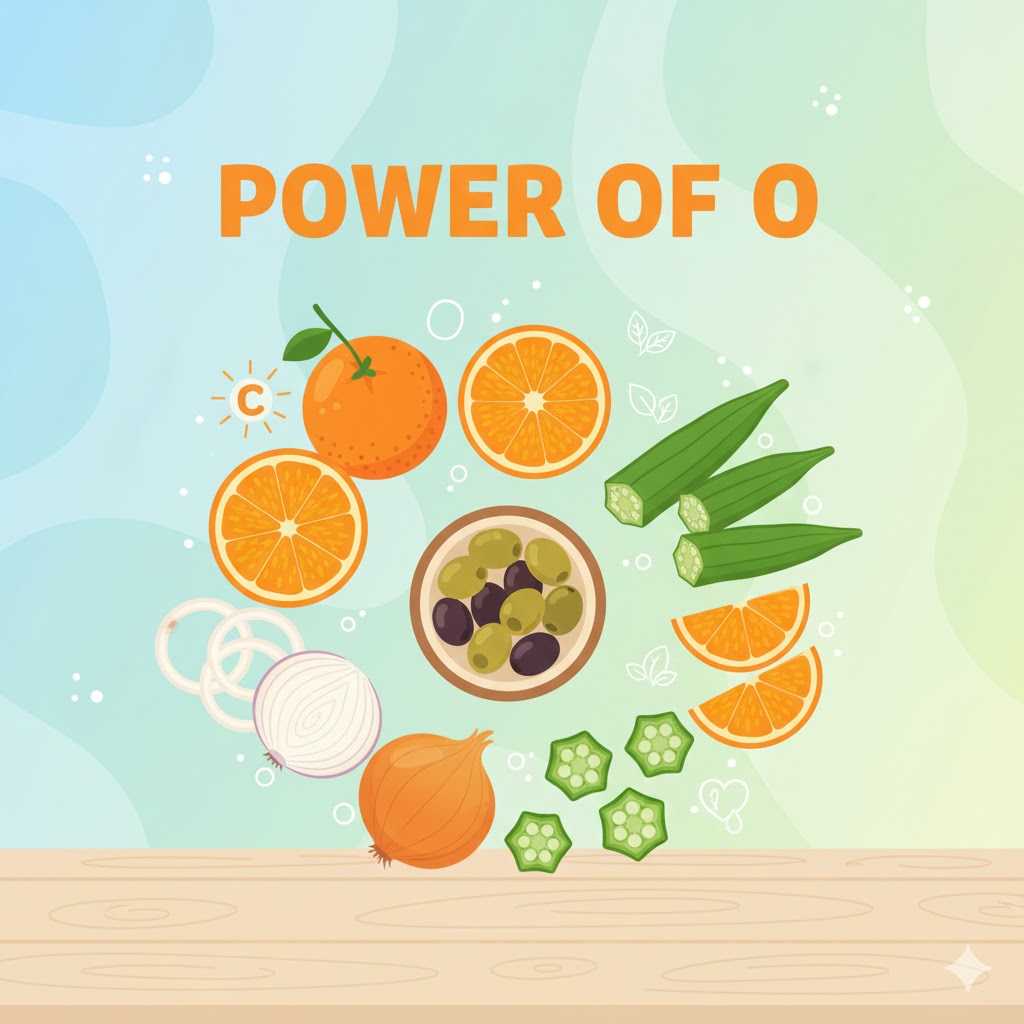
1. Oranges – Sunshine You Can Hold

Pick up an orange in your hand. The peel is dimpled yet smooth, glowing like sunrise. Scratch it lightly with a nail and you get a sudden spray of citrus perfume – sharp, sweet and clean. As you peel, the white pith clings to your fingers and the segments separate with a soft snap, each one full of glittering juice beads waiting to burst on your tongue.
The first bite is always a little surprise: sweet and tangy together, with enough acidity to wake up your taste buds and make your mouth water. It feels light, juicy and refreshing – like drinking water and eating dessert at the same time.
What’s inside 100 g of orange (approx. 1 small–medium fruit)?
- Energy: about 47 kcal
- Carbohydrates: ~12 g (natural sugars + fibre)
- Fibre: ~2.4 g
- Vitamin C: ~53 mg (close to full daily need for many people)
- Smaller amounts of vitamin A, B‑vitamins, potassium and antioxidant plant compounds.
Try this: Pack peeled orange segments in a small box with a few roasted chana or nuts. The fruit hydrates and adds vitamin C, while the nuts slow down sugar absorption and keep you full for longer.
2. Okra – The Green Lady’s Finger of Gut Health
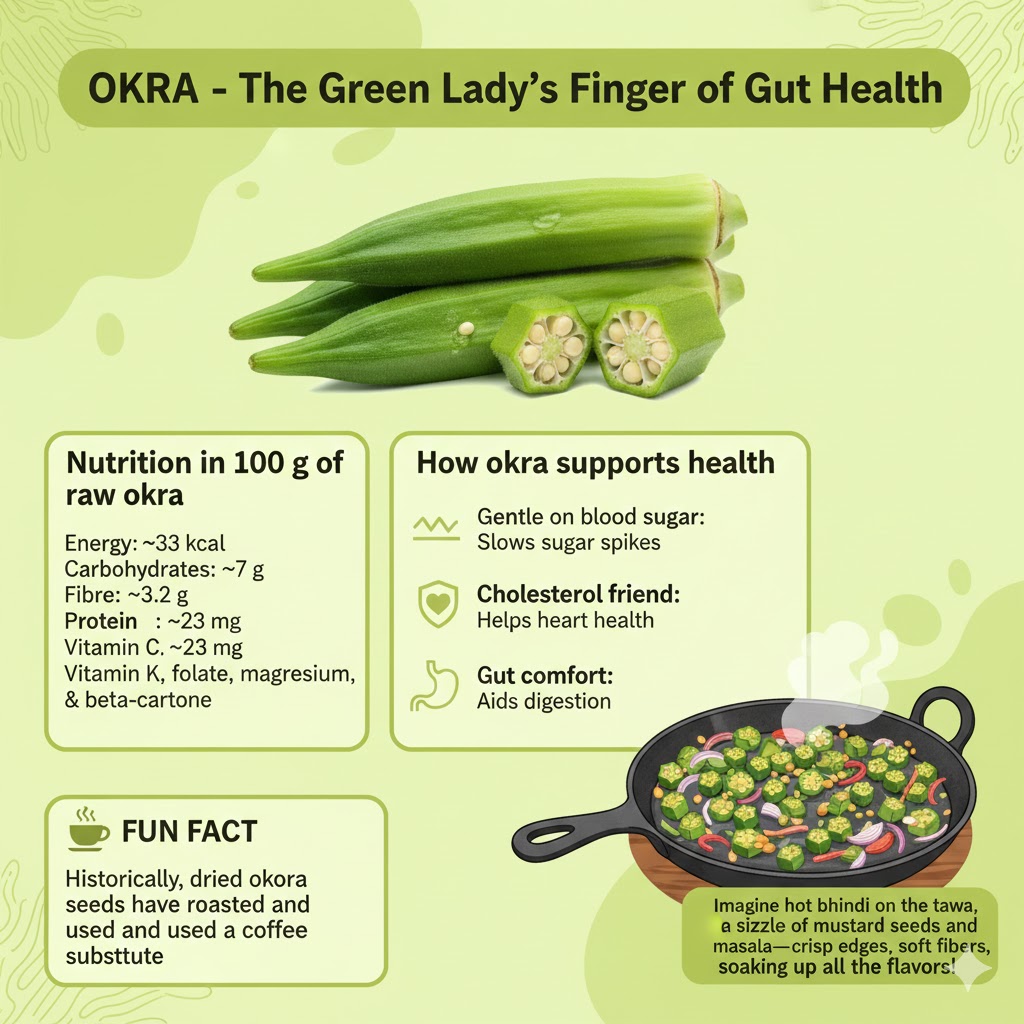
Now move from fruit bowl to sabzi basket. Fresh okra – bhindi, or lady’s finger – feels firm and slightly velvety on the outside. When you bend the tip, a good pod snaps cleanly. Slice it and you see tiny pale seeds set in a soft, sticky gel that clings to your knife.
That “slimy” gel, which many people complain about, is really soluble fibre. When it meets water and heat in your pan – and later, in your intestines – it turns into a gentle, soothing cushion for your digestion.
Nutrition in 100 g of raw okra
- Energy: ~33 kcal
- Carbohydrates: ~7 g
- Fibre: ~3.2 g
- Protein: ~2 g
- Vitamin C: ~23 mg
- Vitamin K and folate
- Small amounts of magnesium and beta‑carotene (pro‑vitamin A).
Serve it with story: Picture okra hitting a hot pan with mustard seeds and sliced onions – a quick hiss, then a gentle crackle as edges turn golden. Each bite is lightly crisp outside and almost creamy inside, soaking up masala and lemon like a sponge.
3. Onions – The Humble Flavour Builders
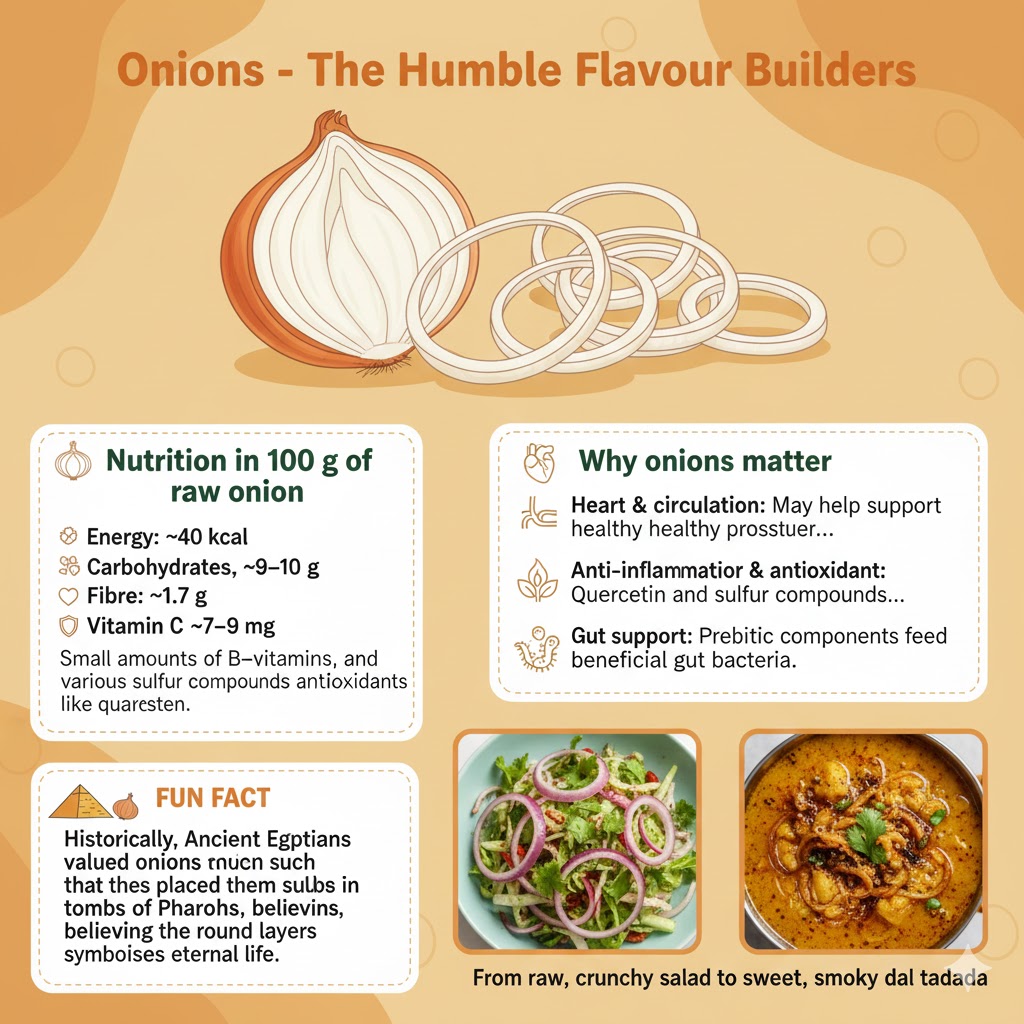
Few kitchen smells are as emotional as onions in hot oil. Raw, they are sharp enough to sting your eyes; but give them time on the flame and they transform – slowly turning from white to translucent, then golden, then a deep, caramel brown that smells sweet and smoky.
Peeling an onion is like opening a tiny nested universe of circles. The dry outer skin crackles in your hands, and inside, layers curve into perfect O‑rings, each one juicy and crisp.
Nutrition in 100 g of raw onion
- Energy: ~40 kcal
- Carbohydrates: ~9–10 g
- Fibre: ~1.7 g
- Vitamin C: ~7–9 mg
- Small amounts of B‑vitamins, potassium and antioxidants like quercetin plus sulfur compounds that give onions their smell.
In your plate: Raw onion rings in salad give a cool, juicy bite and sharpness. Slow‑browned onions in dal tadka become soft, sweet and almost jam‑like, wrapping the lentils in deep flavour without needing heavy cream.
4. Olives – Tiny Drops of Healthy Fat
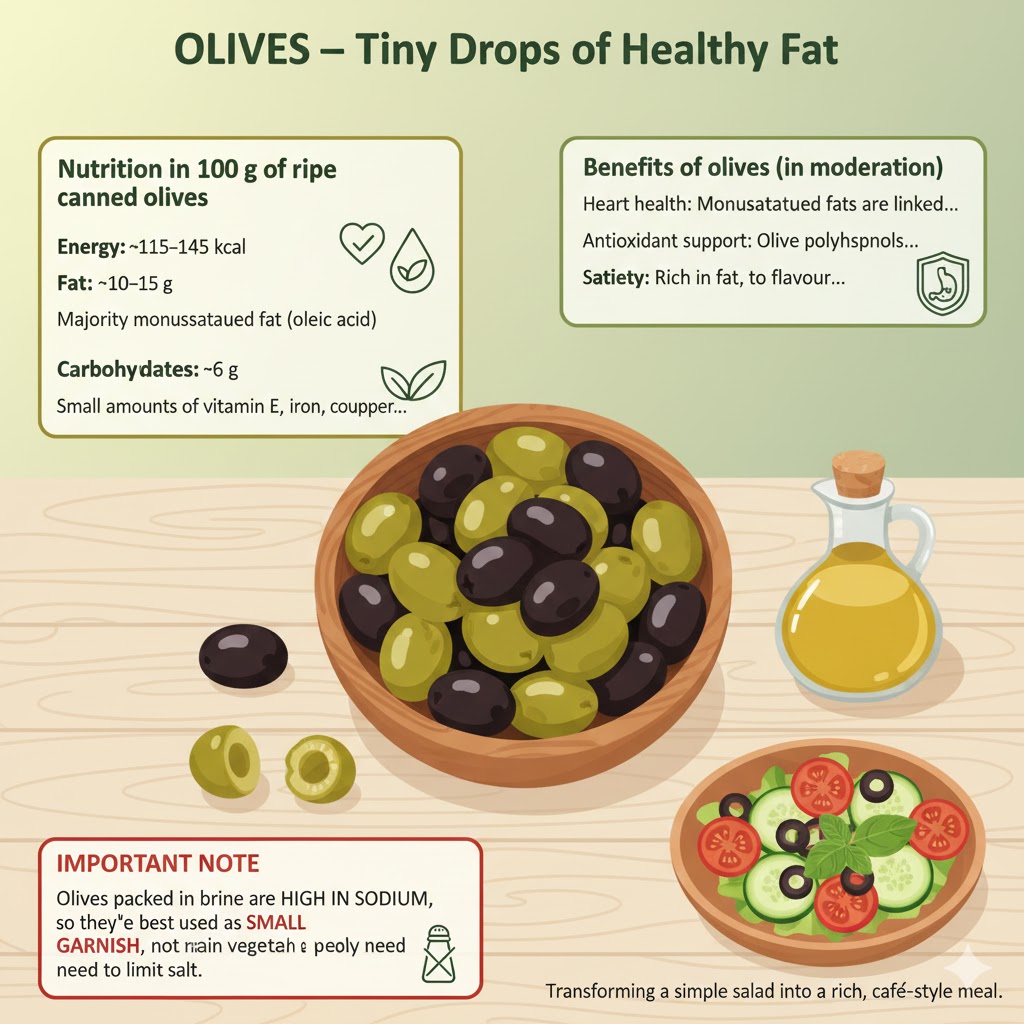
A small bowl of olives looks almost like jewellery on the table – glossy green or deep black beads glistening with a thin coat of oil. Bite into one and it resists slightly before giving way, releasing a mix of salty, sour, slightly bitter, and rich flavours that linger on your tongue.
We don’t usually eat olives in large quantities, but even a few pieces can completely change a salad, pasta or grain bowl – making it feel like café food at home.
Nutrition in 100 g of ripe canned olives (pitted)
- Energy: roughly 115–145 kcal
- Total fat: ~10–15 g (mostly monounsaturated oleic acid)
- Carbohydrates: ~6 g, Fibre: ~3–3.5 g
- Small amounts of vitamin E, iron, copper and polyphenols like oleuropein and hydroxytyrosol.
Note for readers: Many bottled olives are stored in salty brine, which means they can be high in sodium. Use them like a garnish – just 4–5 sliced olives on top of salad, chana, or millet bowls – rather than as a full bowl of sabzi.
5. Other “O” Foods to Discover
If you want to make this series global, you can briefly introduce less common O‑foods:
- Ogen melon: A fragrant melon with pale green flesh, rich in water and vitamin C – perfect for hot days.
- Oroblanco: A sweet, mild hybrid of grapefruit and pomelo, full of citrus vitamin C without too much bitterness.
- Oca: A colourful tuber from the Andes eaten like potato, offering complex carbs and some vitamin C.
- Oyster mushrooms: Soft fan‑shaped mushrooms that bring plant protein, fibre and B‑vitamins to stir‑fries and curries.
- Orach (mountain spinach): A leafy green similar to spinach, used in salads and sautés.
6. Putting “O” on the Plate
To keep the blog practical, end with easy combinations your readers can actually try:
- Orange + nuts snack: One orange with a small handful of peanuts or almonds – vitamin C, fibre and healthy fats together.
- Bhindi‑pyaz sabzi: Okra stir‑fried with onions, tomatoes and light oil, served with roti or millet for a fibre‑rich lunch.
- Onion–orange salad: Thin onion rings, orange segments, coriander, a drizzle of lemon and a pinch of black salt for a fresh starter.
- Olive sprinkle: A few olives sliced over vegetable upma, salad or chana chaat for a Mediterranean twist.
Remind readers that “Power of O” works best as part of a whole rainbow – many letters of the alphabet on the thali, not just one hero food.